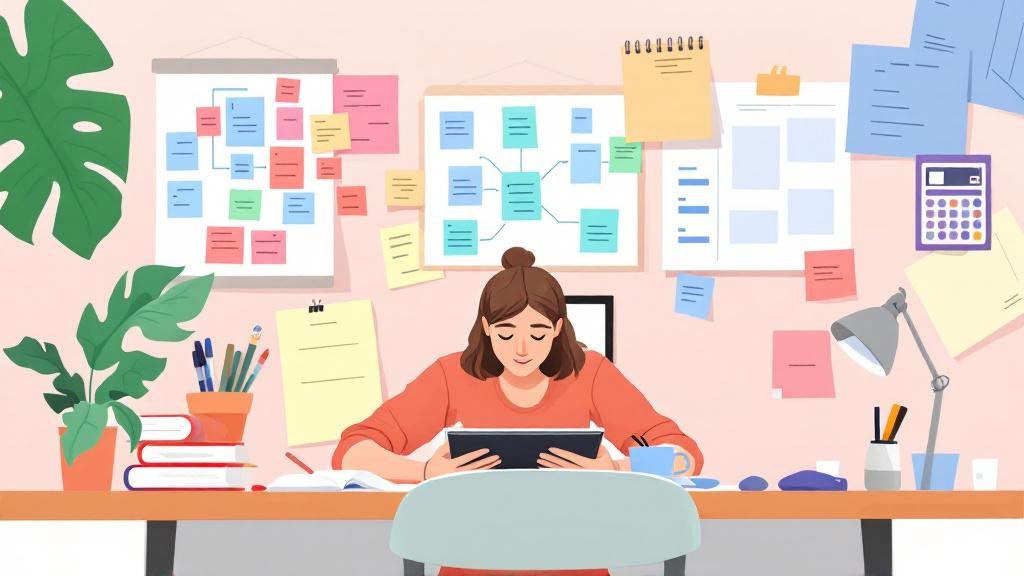
When you take notes but never look at them again, it can feel frustrating. You spend time writing things down, yet the information doesn’t stick. Later, when you need the details, your notes feel messy, unclear, or too long. Many learners struggle with this cycle. However, taking notes that you actually use doesn’t require perfect handwriting, fancy tools, or hours of rewriting. It requires a simple structure that helps your brain understand, organize, and revisit ideas with less effort. Understanding how to create better notes from the start makes it far easier to remember, review, and actually use what you write.
When you shift from “write everything down” to “capture only what helps me learn,” your note-taking system becomes lighter and more meaningful. Below is a practical method designed for busy students, professionals, and self-learners who want notes they’ll return to—because they’re actually useful.
1. Start With a Purpose for Every Note Session
A note-taking system becomes powerful when every page has a purpose. Without purpose, you tend to write too much. Your notes turn into transcripts instead of learning aids. Before a meeting, lecture, or study session, decide what kind of notes you need. Setting a clear purpose before you start ensures you create better notes that are easier to learn from and revisit later.
Try one of these three purposes:
- Capture key ideas (big-picture concepts or insights)
- Identify actions (next steps, follow-ups, decisions)
- Clarify understanding (questions, examples, connections)
When your purpose is clear, your notes become more focused and easier to review. A five-second intention can change the way you write and how much you remember.
Fill in this sentence before you begin:
“The purpose of these notes is to help me understand __________________.”
This simple intention keeps your writing sharp and relevant.
2. Use the “3-Layer Notes” Framework
Useful notes come from structure—not from writing fast. Instead of dumping information on the page, organize it into three layers. This method helps your brain process the material while keeping your notes easy to scan later.
Layer 1: Main Ideas
Write key concepts, section headers, or core messages. Keep them short and bold. These become anchor points for your memory.
Layer 2: Supporting Points
Add details, examples, diagrams, and quick definitions under each main idea. Use short phrases rather than full sentences.
Layer 3: Personal Insights
Add your own thoughts, connections, or questions. Moreover, this layer is what makes your notes useful—because it reflects your thinking, not just the source material.
The 3-layer structure works with any medium: notebooks, iPads, laptops, or index cards. It also prevents you from flooding your notes with unfiltered information. When you combine all three layers, you naturally produce better notes that support deeper understanding and long-term memory.
3. Adopt a Note-Taking Method That Matches Your Brain
Not all note-taking systems work for all people. Instead of forcing yourself into a popular method, choose one that supports your learning style and the type of information you need to capture.
Here are three reliable methods:
1. The Cornell Method (organized + review-friendly)
Use three sections:
- Main Notes
- Cue Column (keywords, questions)
- Summary
This format is excellent for learners who want structure and regular review.
2. The Mind Map Method (visual thinkers)
Place the topic in the center and branch out with key ideas. Use lines, icons, or colors. In addition, this approach works well for brainstorming, exploring new concepts, or planning projects.
3. The Outline Method (fast and simple)
Use bullets, indentation, and short phrases. This method is perfect for fast-paced meetings or lectures where you need to capture ideas quickly.
If you’re not sure which one fits you, try each method for a week. Choose the one that feels the easiest to maintain on your busiest day. Choosing a method that matches the way your brain works is one of the simplest ways to take better notes without adding extra effort.
4. Make Your Notes “Review-Ready” in Two Minutes
Busy learners tend to skip reviewing their notes because the process feels slow. However, a simple two-minute cleanup makes your notes far more useful and easier to revisit.
Right after taking notes, perform a quick review:
- Highlight 3–5 key ideas
- Add one question you still have
- Circle the most important action item
- Draw a box around any concept you want to revisit later
- Write a one- or two-sentence summary
This tiny review locks the information in your memory. It also prepares your notes for future use without adding extra stress.
5. Use Digital Tools to Organize and Search Quickly
Paper notes feel satisfying. However, digital notes help you search, tag, and retrieve information faster. In fact, you don’t have to choose between them. You can combine both.
Here are tools that work well for busy learners:
- Notion – structured databases, tags, templates
- Google Keep – quick captures and checklists
- OneNote – flexible notebook-style sections
- Apple Notes – fast capture, good for mixed media
- Readwise + Reader – highlight syncing and spaced review
The goal is not to use every tool. The goal is to choose one or two tools that support your natural workflow.
To keep things simple, create three core folders or tags:
- Ideas
- Projects
- Learning Notes
This structure makes information easier to find and easier to reuse.
6. Turn Notes Into Action or Knowledge Within 24 Hours
Notes only matter when you use them. To turn notes into something valuable, revisit them within one day. As a result, this short window helps your memory solidify and encourages you to extract what truly matters.
Choose one of these follow-up actions:
- Convert ideas into tasks
- Create a mind map summary
- Teach someone a concept
- Turn meeting notes into decisions
- Add key insights to your knowledge base
Your goal is not to rewrite your notes. Your goal is to apply your notes so they transform into understanding, progress, or next steps.
Template: “Useable Notes” Page Layout
Topic: _____________________________________
Purpose of This Note Session:
• ______________________________________________
Main Ideas (Layer 1)
• ______________________________________________
• ______________________________________________
Supporting Points (Layer 2)
• ______________________________________________
• ______________________________________________
My Insights (Layer 3)
• ______________________________________________
• ______________________________________________
Actions / Questions:
• ______________________________________________
Two-Minute Review:
Summary: ____________________________________
You can copy this into Notion, your notebook, or a digital note app. As you repeat these small habits, you’ll notice yourself taking better notes with far less effort.
Final Thoughts: Notes Become Useful When You Keep Them Simple
Better notes come from clarity, not complexity. When you set a purpose, use the three-layer structure, simplify your method, and perform a short review, your notes become something you use instead of something you forget. Start by using the template above for your next learning session. Once you try it, you’ll notice that your notes feel lighter, clearer, and far more useful.
🎓 Learn. Apply. Evolve.
Every skill you build shapes a more confident, capable version of you.
Explore more from KnowlyDaily:
- Productivity – Turn learning into consistent action.
- Self-Growth & Mindset – Strengthen your mental foundation for success.
- Healthy Lifestyle Tips – Learn habits that keep your mind and body strong.
- Smart Money – Grow financially while you grow intellectually.
- Travel & Global Life – Learn from cultures, people, and experiences worldwide.
Our Partners
Sometimes, the best reminder to stay calm and confident is something you wear every day.
💡 Explore EveryMoodTee — minimalist T-shirts that speak your mood before you say a word.

